Way Cool Plumbing & Air
← Blog·HVAC·

What's Hiding Inside Your Air Handler? Why Phoenix AC Systems Get So Dirty

You change your filter and keep your house clean — so why can the inside of an air handler still get filthy? Because Phoenix systems move a lot of dusty air. Here's why dirt builds up inside air handlers and blower wheels.

What's Hiding Inside Your Air Handler? Why Phoenix AC Systems Get So Dirty

QUICK ANSWER

Even in a clean home with a fresh filter, the inside of a Phoenix air handler can accumulate dust over years of operation, because the system moves an enormous volume of air and no filter captures everything. The blower assembly and evaporator coil interact with nearly all of that air, so fine dust, pet hair, and lint gradually collect on them. Regular inspection and cleaning — including a blower pull — keeps the equipment operating the way it was designed to.

You change your AC filter. You keep your house clean. So why can the inside of an air handler still get filthy? Because your HVAC system moves an enormous amount of air. Day after day, that air carries particles with it. Your filter captures part of the contamination before it reaches the equipment, but keeping a system completely spotless over years of operation is another story. That's one reason we're interested in what's happening inside the air handler — not just whether the thermostat says 75 degrees.

What is inside an air handler?

The air handler contains several components involved in circulating and conditioning the air in your home. Two particularly important ones are the evaporator coil and the blower assembly. The blower pulls return air into the system, moves it across the indoor coil, and pushes conditioned air into the ductwork. That means virtually every bit of air circulating through your central HVAC system interacts with this part of the equipment — so it's also where airborne debris tends to settle. If you want the basics on that fan first, we cover what the blower wheel is and does in a companion post.

Why is Phoenix so tough on HVAC equipment?

Phoenix cooling systems work hard. During our extended cooling season, your system may run day after day just to maintain the temperature inside your home. And we have plenty of dust. Every time a door opens, pets go outside, people come home, or outside air finds its way into the house, particles can enter the indoor environment. Your air filter is supposed to capture airborne debris before it reaches sensitive HVAC components — but filters aren't perfect.

Does a dirty filter cause a dirty blower wheel?

It certainly doesn't help. A missing, poorly fitting, or neglected filter can allow significantly more contamination into the system. But even homeowners who regularly change their filters may eventually see some accumulation inside their equipment. Filtration quality also matters — a higher-quality filter and a properly sealed air cleaner capture more of what's moving through the system. That's why changing your filter is important, but it's not a substitute for inspecting the equipment itself.

What does a dirty blower wheel look like?

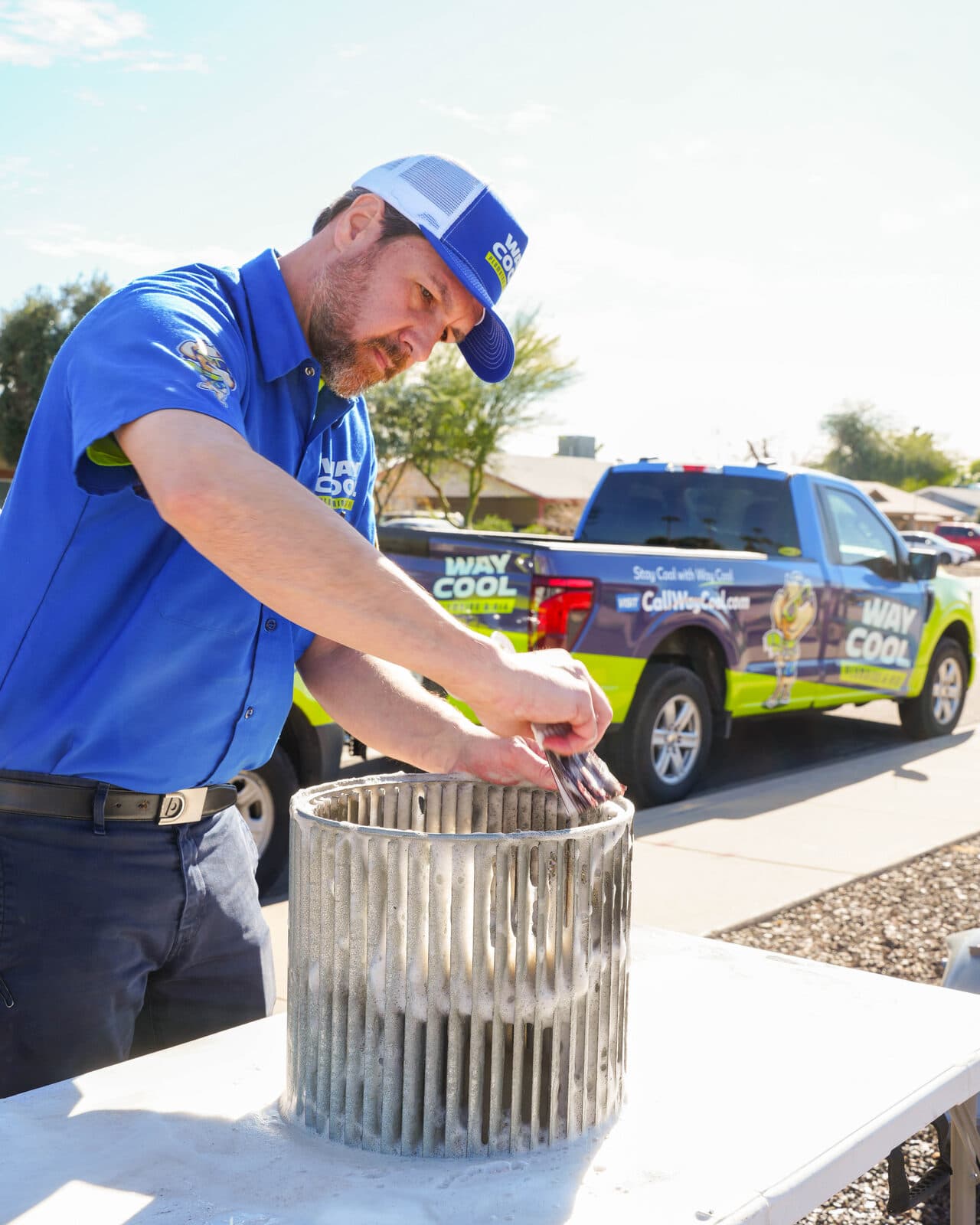
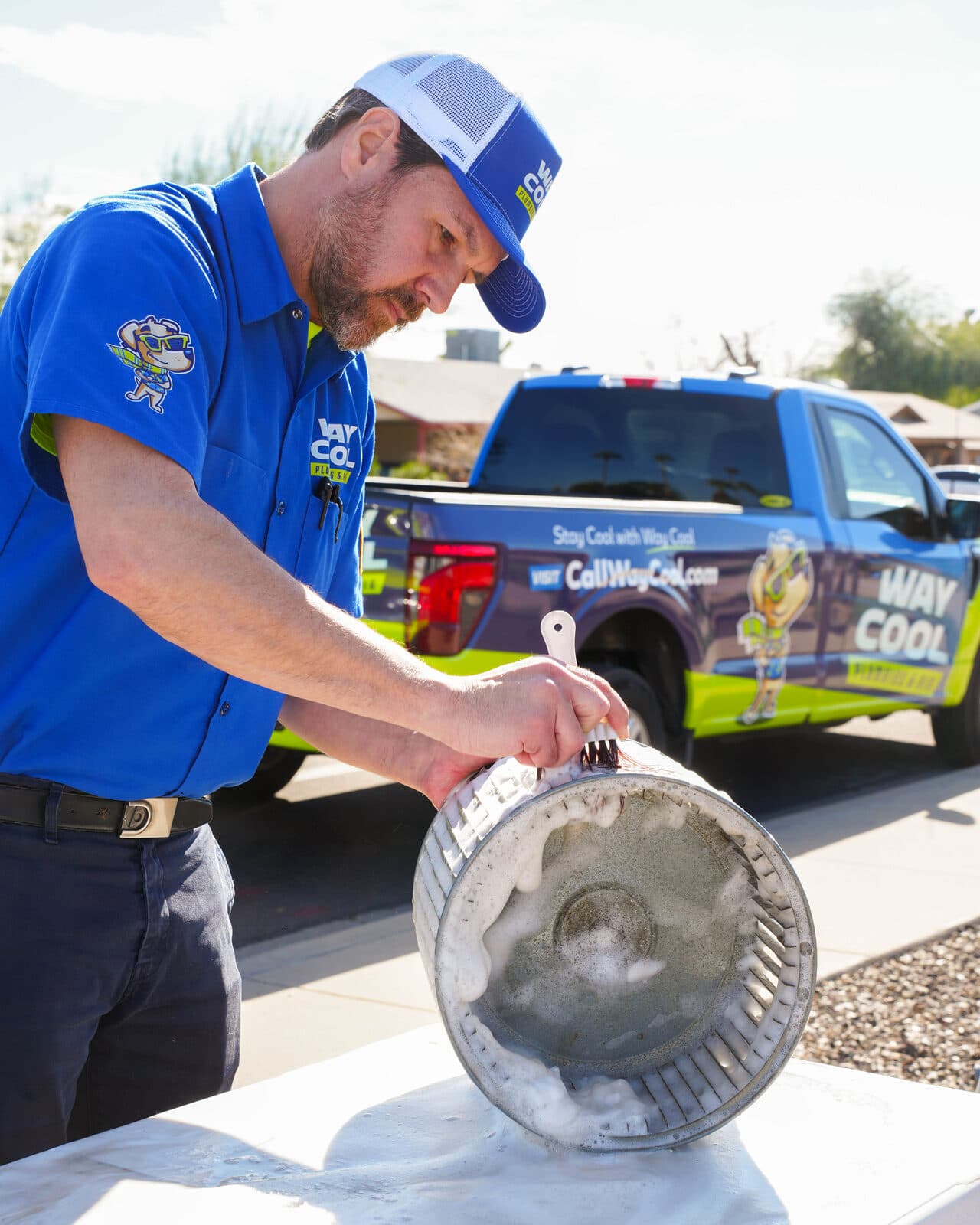
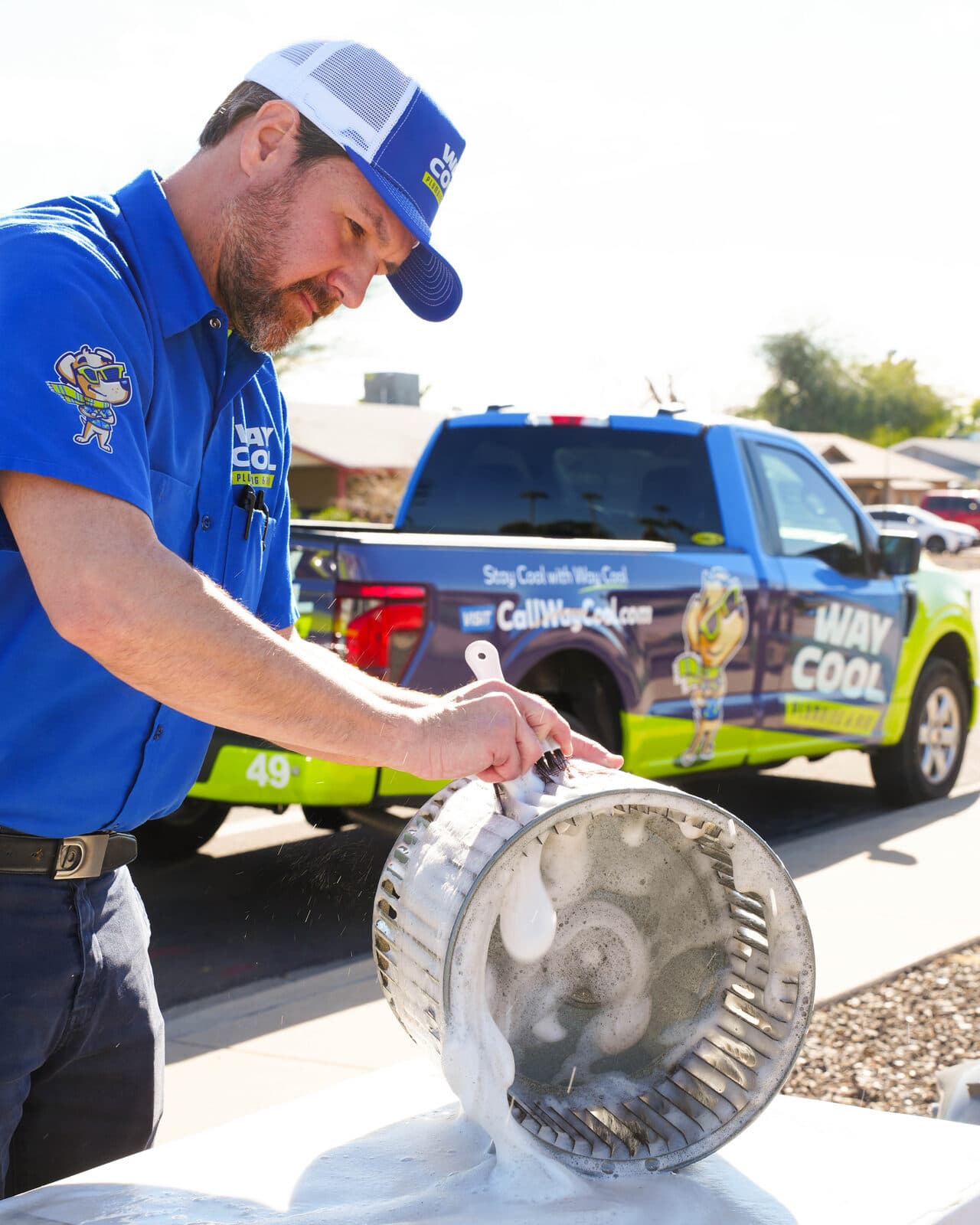
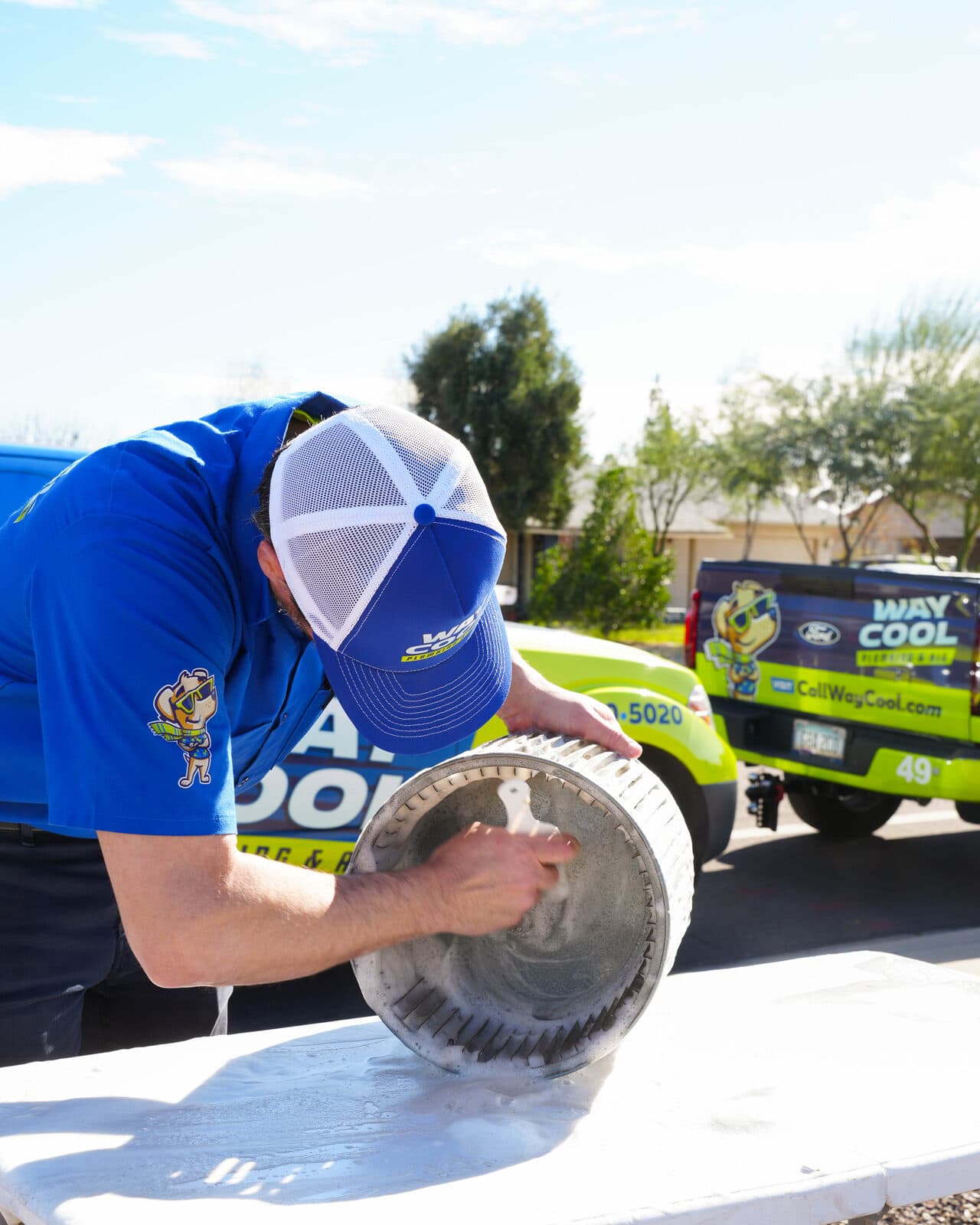
This is where pictures are worth a thousand words. When we pull dirty blower wheels, we can find buildup coating the individual blades of the wheel. Instead of seeing clean blade surfaces, you may see a layer of gray or brown contamination packed along them. And because much of the blower assembly is hidden inside the cabinet, homeowners can live with that buildup for years without knowing it's there. The thermostat doesn't have a "dirty blower wheel" warning. The system just keeps running. That's exactly why we pull the assembly to clean it rather than trust a quick glance.

Can you prevent blower-wheel buildup?

You can certainly reduce it. Start with good filtration: use the correct filter for your HVAC system, replace it on schedule, and make sure it's installed properly. Then have the equipment routinely inspected and maintained. If a blower wheel is beginning to accumulate debris, we'd rather address it during a planned maintenance appointment than wait until you're calling because the system isn't performing correctly. That's especially important in Phoenix — when it's 110°F outside, you don't want to discover that your AC has been neglected for the last five years.

Frequently Asked Questions

Why does my air handler get dirty if I change the filter?

Your system moves an enormous volume of air, and no filter captures everything. Over years of operation, fine particles that slip past the filter gradually settle on the blower and coil — even in a clean home with a fresh filter.
Why do Phoenix AC systems get dirtier than average?

Two reasons: our extended cooling season means systems run far more hours than in milder climates, and the desert environment carries plenty of dust. High runtime plus high dust equals more accumulation inside the equipment over time.

Does a dirty filter make the blower wheel dirtier?

It doesn't help. A missing, poorly fitting, or neglected filter lets significantly more contamination into the system. But even with regular filter changes, some buildup can still accumulate inside the equipment over years of operation.

How can I tell if my blower wheel is dirty?

You often can't from the outside. Much of the assembly is hidden inside the cabinet, and the thermostat has no dirty-blower warning — the system just keeps running. Seeing the actual condition usually requires a technician pulling or accessing the wheel.

Can I prevent buildup inside my air handler?

You can reduce it: use the correct filter, replace it on schedule, install it properly, and have the equipment routinely inspected and maintained. Addressing early buildup during planned maintenance beats waiting for a performance problem.

Want to know what's hiding inside your air handler? Schedule your HVAC maintenance with Way Cool Plumbing & Air. We'll inspect the system, show you what we find, and help keep the equipment clean before the next Phoenix summer puts it back to work. Call (623) 250-6492. Stay Cool with Way Cool.

Got more questionsOr Want a Quote?

Schedule online or call. $89 service call, waived with any approved repair.

Call (623) 250-6492
CALL